Ruby Sparks and killing the "Dream Girl"
Is she called a dream girl cause she doesn't exist?

I first watched “Ruby Sparks” in high school, post “The Batman”, to continue working through all of Paul Dano’s filmography. This binge-watching spree was the exception among the many other actor binge-watches I had done prior. Normally, I would do so to fulfill a hyperfixation or celebrity crush, a rite of passage many teenage girls go through. However, in this instance, I was not attracted to Paul Dano whatsoever, but I did think he was a phenomenal actor and painfully underrated, given how solid his credits are. “Little Miss Sunshine” and “There Will Be Blood,” I mean, come on, why on earth weren’t we talking about him more? In retrospect, I think my lack of attraction toward Paul Dano made my viewing experience of “Ruby Sparks” more authentic. It let me see the film through a lens not blinded by attraction or giving the main character a pass for any bad behavior because he’s hot, which my developing brain absolutely would have done.
Upon a recent rewatch of the film as a now 21-year-old, I found myself relating to, and sometimes feeling like, the title character, Ruby. The film, which is labeled a romantic comedy, follows Calvin, a former literary darling whose writer’s block is preventing him from writing his next novel. After consulting his therapist, Calvin pulls out his old typewriter and writes about his dream woman, Ruby, who inspires him and becomes his muse, only to find Ruby a week later in the flesh on his couch, realizing his words have become a real, living, breathing woman.
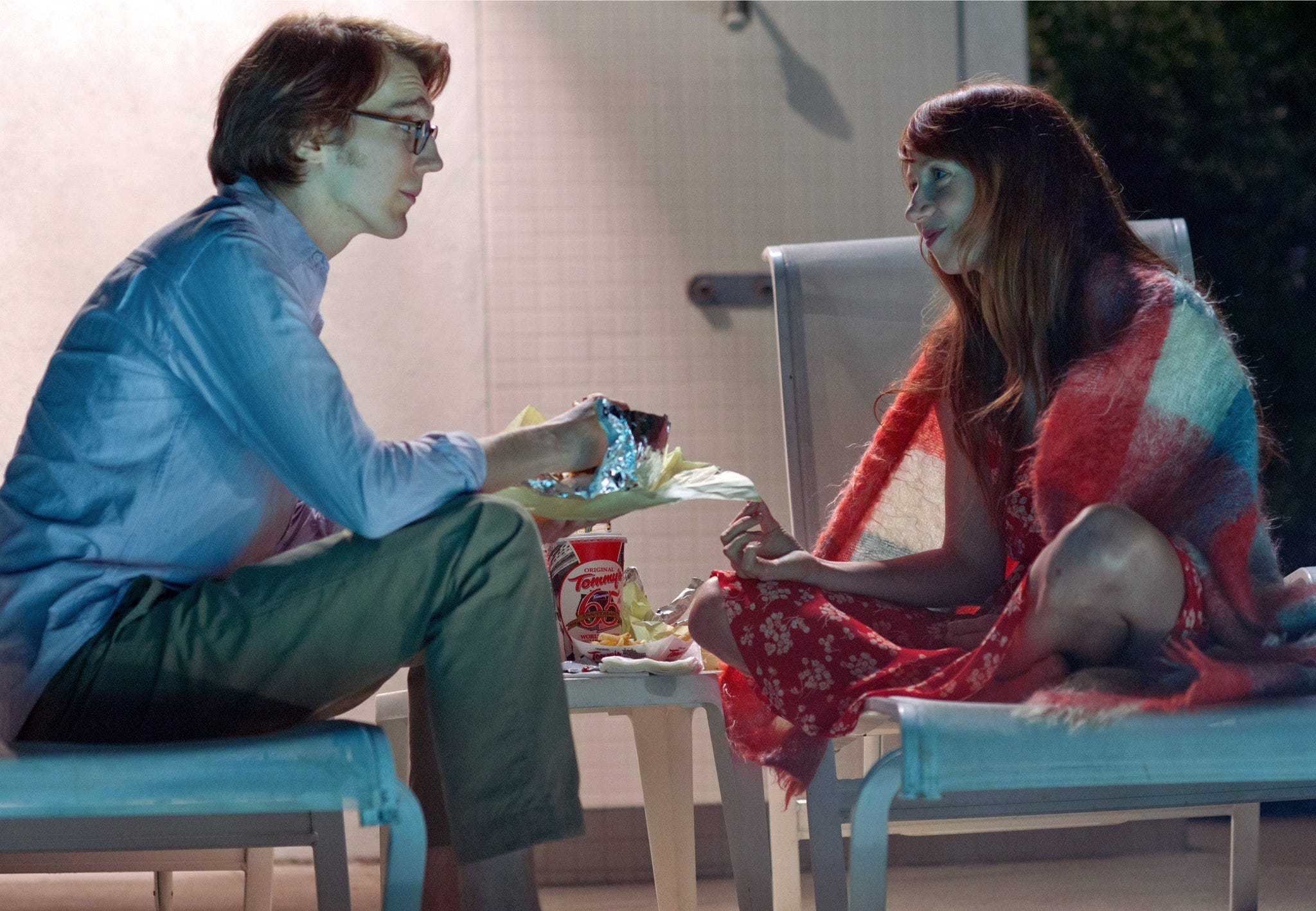
I think it’s important to note that Ruby isn’t really a person, but not for the reason you’re thinking. Ruby is more of a facade, or a concept of a woman; she’s what men think they want, or at least say they want. Her personality, which is an ebb and flow of whatever Calvin finds desirable in the moment, is so painfully empty. She’s cute but also sexy and quirky, and she needs Calvin like air and (literally) can’t exist without him. She is a dream girl, not because of who she is, but because of who she could be for Calvin.
We never see who Ruby is without Calvin, which I guess could be intentional, although it’s all the more ironic given what the film is trying to say. She has no wants or needs (besides Calvin), no tastes or favorite anything, and, most scary to me, no emotions unless Calvin evokes one. We see this play out throughout the movie when Calvin realizes he can control Ruby the same way he created her, by writing. He makes her speak French, and then she’s jumping, and then she’s acting like a dog, and over and over again, she’s constantly saying, “I love you!” Every action is dominated by a man and a typewriter.
In the end, Calvin gets a happy ending, which he in no way deserved, and this is the one Paul Dano movie where he doesn’t get the shit beaten out of him, and God, I wish he did. It’s obvious to me, and most women who have seen this film, that it’s clearly a commentary on how male screenwriters will write their female characters as dreamy whispers of a person who does not act like a fully fleshed-out human being and whose existence can be summed up as an on-screen adaptation of the male writer’s fantasy
So why do I feel so strongly connected to this film now in a way I hadn’t before? Is it because now I have to sit in rooms with male writers and watch them attempt to create things with women, or, god forbid for women, and fail miserably at both, while I sit and patiently wait for the moment when I can share my thoughts in the least threatening and most gentle way possible? Yes, but no.
It’s because I have been the victim of the “dream girl” idea before. Before you groan, I realize how narcissistic and self-absorbed that sounds. “Oh, woe is you.” But trust me, being undesirable is a feeling I would take 10 times over before I ever want to experience the dehumanizing feeling of someone obsessing over a version of you that literally doesn’t exist.
Twice this has happened to me, where men (whom I don’t really know) have expressed this infatuation with me, only it’s not me whatsoever. It’s a girl with my face and my name, but one who couldn’t be further from me. It’s strange because it’s not the same as animal-brained lust, which isn’t a unique experience in the slightest and is something every woman knows all too well. It’s an honest, pure crush, which would almost be sweet if it had legs to stand on. It’s like they created a hodgepodge of my soul based on public perception or two-minute interactions (most of which I do not remember), and in their head, that’s who I am. This girl is sweet, happy, kind, and blah blah blah. But it’s not me, because in reality, you do not know me. And that’s not to say the real me isn’t desirable. If you took the time to get to know me before your mind made up its decision, you may find that I’m better (or worse).
You have never seen me in an unpleasant mood, hungover, angry, or upset. You don’t know what foods I like or movies I’m into, or whether I have the worst taste in music on the planet. What pains me most is that those things are thrown out the window. They aren’t as important as who I could be, or, if confronted with them, they alter the perception of me in their heads and create cracks in the false reality they built, just like Ruby. To me, the movie reads more like a horror film than anything else. It’s as if “Obsession” played off Bear’s control over Nikki’s autonomy for laughs instead of treating it as something terrifying. What happens when the desire for control overrides the need to be understood or adored? Who’s to say? In short, I think if we see people not as a concept or as someone on a pedestal, you may find that the real person in front of you is enough fulfillment for connection and much more satisfying than anyone you could make up in your mind.